Home › Walkway and Pathway Paving
Add safe, clean access around your property with asphalt walkway paving in Norfolk, VA. We install straight and curved paths that drain correctly and blend with your landscaping and driveway.
Precision Asphalt Norfolk provides professional asphalt walkway paving throughout Norfolk, VA, Virginia and the surrounding area. Our licensed, insured crew delivers safe, clean, on-time work with a free estimate before anything begins. Call (757) 908-3635 or request your free quote.
Practical, Attractive Walkways for Norfolk Homes and Businesses
An asphalt walkway or pathway should do more than connect point A to point B. It should drain properly during a summer storm, hold up under Norfolk’s humid climate, and look clean and finished next to your lawn or building. At Precision Asphalt Norfolk, we focus our walkway and pathway paving on how people actually use these spaces every day.
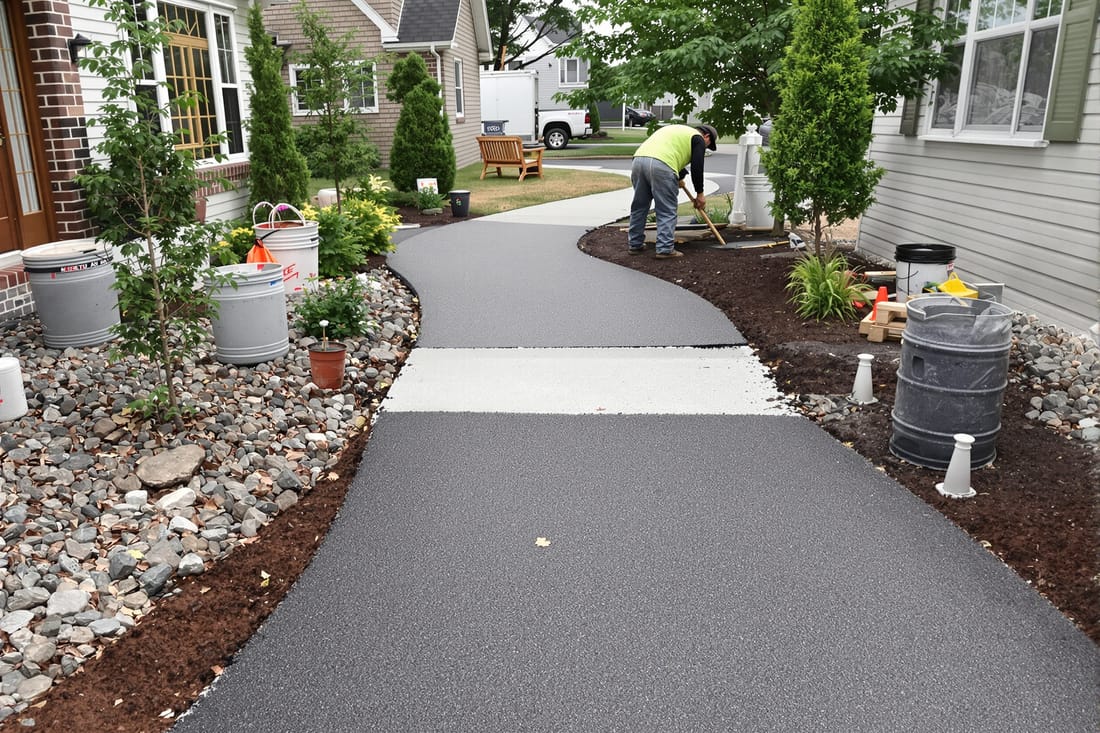
We install asphalt walkways for front entries, side yards, garden paths, school campuses, apartment complexes, and commercial properties. Whether you need a simple straight walkway from parking to front door or a curved path through a courtyard, we start by looking at how foot traffic moves, where water currently collects, and how the path will tie into existing pavement and landscaping.
Our team is local to Norfolk, so we understand how heavy rain, salt air, and tree roots common in older neighborhoods along Hampton Boulevard and Ghent affect surfaces over time. When we recommend a design or thickness for your pathway, it is based on what holds up here in Norfolk, not just what looks good on paper.
How Our Asphalt Walkway Paving Process Works
When you call Precision Asphalt Norfolk about a new walkway or pathway, we start on site. We walk the route with you, note slopes, existing drainage patterns, and nearby structures, then measure and mark the proposed layout. This first visit is also when we talk through width (often 3 to 5 feet for residential, 5 to 8 feet for commercial or school walkways) and any curves or transitions.
Site preparation is the most important step. We remove grass, roots, old sidewalk pieces, and any unstable soil to a depth that will support the new pavement, often 6 to 8 inches for typical walkways, more if the soil is soft or if golf carts or maintenance vehicles will use the path. We then install and compact a graded stone base. Proper compaction with a plate tamper or small roller is what prevents future sinking and puddles.
Next, we set forms and edges where needed, such as along gardens or lawns. Then we place the hot mix asphalt. For most walkways, we lay 2 to 3 inches of asphalt in one or two lifts, using hand tools to shape edges and achieve a smooth, slightly crowned surface that sheds water. Our crew compacts with a roller or plate compactor while the asphalt is still workable, focusing carefully on joints and edges since these are common failure points.
Finally, we clean up the site, remove forms, and review the finished walkway with you. We explain curing and use guidelines, such as avoiding sharp objects or heavy equipment for a few days, so your new path sets up correctly.
Design Choices That Make Your Pathway Easier to Use
Asphalt walkway paving offers more options than many people realize. During your estimate, Precision Asphalt Norfolk will help you choose details that fit your property, your budget, and how you expect people to use the path.
Width and route are the first design choices. A narrow side-yard walkway that will see only light use can be as small as 3 feet, while a school or multifamily complex often needs 6 feet or more so people can comfortably pass each other. Curved paths around trees or landscaping can make a yard or campus feel more inviting, but we keep curves gentle enough for strollers and wheelchairs when accessibility is a concern.
Edge treatments matter too. For a clean line next to grass, we can compact the asphalt slightly above the lawn so a string trimmer can easily define the edge. In areas with mulch beds or where soil tends to wash, we may recommend a small concrete, brick, or metal edge restraint to keep the asphalt and base material from raveling over time.
Surface texture and slope are also part of the design. We compact to a smooth finish that remains comfortable for walking, rolling trash cans, or pushing carts, but we avoid polishing the surface so it still has traction in Norfolk’s frequent rain. We build in a slight cross slope, typically about 2 percent, so water drains off the walkway rather than pooling, which reduces algae growth and slipperiness in our humid climate.
What Affects Cost for Asphalt Walkway Paving in Norfolk
Customers often ask why two walkways of similar length can be priced differently. The cost of asphalt walkway paving depends on a handful of practical factors that we are transparent about during our estimates.
Site access is a major factor. A straight, open path along a driveway is faster and less labor intensive than a narrow path that runs between buildings or through a fenced backyard where machines cannot easily reach. When equipment cannot get close, more work must be done by hand, which affects labor time.
Soil and base conditions also drive cost. If we find soft, organic, or saturated soil, especially in low-lying areas near the Elizabeth River or in yards that stay wet after storms, we may recommend deeper excavation and a thicker stone base so the path does not settle. It costs more on day one, but it avoids having to tear out and redo a failed walkway later.
Thickness and mix type matter as well. A light-use garden path can use a thinner asphalt section, while a walkway that will see carts, service equipment, or frequent deliveries should have a thicker, more robust section. We explain these options clearly so you can decide what level of durability you want.
Finally, removal of existing materials and drainage solutions can influence cost. Breaking up and disposing of old concrete or unstable asphalt, or adding a small swale or drain next to the path, adds steps to the job, but these are often necessary to avoid future heaving, standing water, and surface cracking.
Dealing With Norfolk Weather, Roots, and Other Common Problems
Norfolk’s climate creates specific challenges for walkways and pathways, and Precision Asphalt Norfolk plans each project with these in mind. Our region sees quick temperature changes, frequent rain, and plenty of mature trees. All of these can shorten the life of a poorly built path.
Tree roots are one of the biggest issues for walkways in older neighborhoods. Instead of simply paving over surface roots, we evaluate whether the path can be slightly rerouted, or we adjust base thickness and root trimming carefully to protect both your pavement and your trees. In some cases, we recommend a flexible transition joint where the path meets thick root zones to reduce cracking.
Standing water is another concern. If your current path puddles after a storm, we look upstream and downstream, not just at the pavement itself. We may adjust the grade of the new walkway, add a shallow swale next to it, or tie it into existing drains. This is especially important on shaded sides of homes where water can sit and create slippery algae.
For existing asphalt walkways that are rough but structurally sound, we can often correct issues with patching, localized base repairs, and an asphalt overlay rather than full replacement. We grind down high spots, fill low areas, and resurface to create a smoother walking surface, which can be a budget friendly option for long pathways on school campuses or commercial sites.
We also guide you on routine care. Keeping edges trimmed, sweeping off leaves and debris, and addressing small cracks early all extend the life of your walkway. Our estimates include realistic expectations for lifespan and maintenance in Norfolk’s conditions so there are no surprises.
When to Schedule and How to Get Started
The best time to schedule asphalt walkway paving in Norfolk is typically from late spring through early fall, when daytime temperatures stay consistently warm and the ground is not saturated. This allows the asphalt to compact and cure properly, which leads to a smoother, longer lasting surface. We do work outside that window when conditions allow, but we will be honest if the weather is not suitable so you are not investing in a compromised result.
Our process to get started is simple. After your initial call or online inquiry, we schedule a site visit, usually within a few business days. We walk the area with you, listen to how the path will be used, and point out any grading, drainage, or root issues we notice. Then we prepare a written proposal that outlines the scope of work, base and asphalt thickness, and any optional items like edge restraints or tie-ins to existing pavement.
When you are ready to proceed, we set a date that works with your schedule. For most residential walkways, the actual paving can be completed in one day, with minor prep or finishing work before or after. Commercial and campus projects with multiple pathways may take longer, but we coordinate phases so access is maintained and disruption is minimized.
From the first visit through final walkthrough, Precision Asphalt Norfolk focuses on clear communication, safe work practices, and leaving your property tidy. If you are considering asphalt walkway paving for your home, business, or campus in Norfolk, we are ready to provide a straightforward, locally informed plan that fits your needs and budget.